Frequently Asked Questions
Need a Hand? We understand you might have questions when ordering cast stone. We’ve gathered the most frequently asked questions from our customers here to ensure a smooth experience with Acanthus Cast Stone, from initial quote right through to delivery.
Products
Do you offer bespoke cast stone?
Yes, we have completed many bespoke cast stone projects over the years for customers. Speak to our team about your requirements to see how we can help.
Is your semi-dry cast stone structural?
Semi-dry cast stone is not load-bearing.
While semi-dry cast stone is a dense, durable architectural material with excellent compressive strength, it is intended for decorative applications, not primary structural support. It is commonly used for elements such as cills, heads, plinths, banding, columns and other façade details.
Semi-dry cast stone is designed to be supported by the building structure. Structural loads should be carried by steel, concrete, masonry, or other engineered structural systems—not by the cast stone itself.
That said, semi-dry cast stone can be used in anchored or supported applications when properly detailed and installed. Final design, support conditions, and load requirements should always be reviewed by the project’s architect or structural engineer.
We’re happy to help clarify appropriate uses and detailing for your specific project.
What cast stone colours are available?
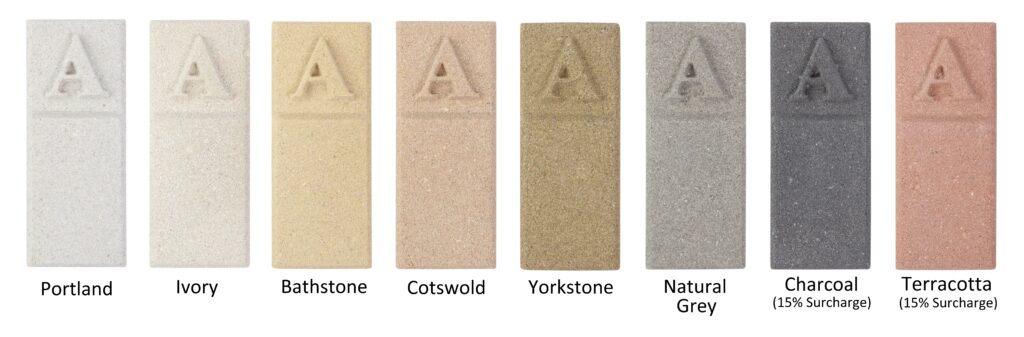
We manufacture all our products in a range of 8 distinctive natural stone colours, so they can perfectly complement any building. Visit our cast stone colours page to find out more about our range.
How does cast stone compare to natural stone?
Cast stone offers a balance of durability, design flexibility, and consistency, while natural stone provides one-of-a-kind variation and natural character. The best choice depends on the project’s design goals, budget, and performance requirements.
For more information, please see our guide here
Delivery
What is the lead time and will it slip?
Lead times vary throughout the year depending on demand. During quieter periods, orders can often be completed in around 4 weeks, while lead times may extend during busier summer months.
Bespoke items typically take longer than standard products, as additional time is required to design and manufacture custom moulds.
We always provide a clear lead time at the point of quotation and work hard to meet it. If your programme is tight, please speak to our sales team—where possible, we’ll explore options to improve turnaround or phase deliveries to suit your schedule.
How will my cast stone products be delivered?
The standard delivery vehicle is an 18 tonne with a tail lift (to lower the pallet to road level) and a trolley to pull the
pallet to the nearest convenient place. Delivery is on a ‘kerbside’ basis, if access is restricted or difficult a smaller (7.5
tonne) lorry can be provided if we are made aware of this issue before despatch.
Visit our deliveries & returns page for further information.
Installation
Is pointing mix included?
Yes. Colour-matched pointing mix is supplied free of charge with all orders that include joints. We always allow sufficient quantity to ensure you won’t run short on site.
Full application guidance can be found in our pointing mix instructions
How do I install pier caps supplied in multiple pieces?
Some of our pier caps are supplied in multiple components, these pieces are intended to be installed so they appear as one seamless unit once complete.
Mortar should always be used to secure the bottom piece to the brick or masonry pier. However, we do not recommend using mortar between the upper layers. Mortar joints between these pieces can be visually distracting, may stain the stone, and reduce the intended one-piece appearance.
Instead, we recommend using a high-quality construction adhesive to bond the pier cap components together. Adhesives provide a cleaner finish and help maintain the appearance of a single solid unit.
The following adhesive is highly recommended for this application:
Maintenance
What causes white marks (efflorescence) on the stone?
Efflorescence is a natural, temporary white or light-colored powdery residue that can appear on cast stone, concrete, or masonry surfaces. It’s caused by water moving to the surface of the material, dissolving natural salts, and carrying them to the surface. When the water evaporates, the salts are left behind.
A few important things to know:
- Efflorescence is not a defect and does not affect the strength or durability of the cast stone.
- It is most common on new installations or after periods of heavy moisture or rain.
- In many cases, it will diminish or disappear on its own as the structure dries and ages.
If cleaning is desired, efflorescence can usually be removed with dry brushing or gentle washing with water. Harsh chemicals or acids should be avoided unless specifically approved for cast stone.
Efflorescence is a normal characteristic of cement-based products and does not indicate a problem with the material or manufacturing process.
How do I clean and maintain cast stone?
Cast stone is durable and low-maintenance, but a little routine care will keep it looking its best for decades.
Routine cleaning
For most situations, clean cast stone with plain water and a soft brush or sponge. If needed, use a mild, pH-neutral soap (like dish soap) diluted in water. Rinse thoroughly so no residue remains.
What to avoid
- Do not use pressure washers, sandblasting, or abrasive pads — these can damage the surface.
- Avoid harsh chemicals, acids, bleach, or masonry cleaners unless specifically approved for cast stone.
- Do not use metal brushes or scrapers.
Stains and buildup
Organic growth (dirt, algae, mildew) can usually be removed with gentle brushing and mild soap. For stubborn stains, test any cleaner on a small, inconspicuous area first and follow manufacturer recommendations.
Sealing
Cast stone does not typically require sealing. If a sealer is used for a specific application, it should be breathable and compatible with cast stone. Improper sealers can trap moisture and cause discoloration.
Weathering and aging
Natural weathering is normal and part of cast stone’s character. Slight color variation and patina over time are expected and do not affect performance or durability.
General maintenance tips
- Inspect periodically for cracks or movement, especially at joints.
- Keep adjacent landscaping, irrigation, and soil from constantly saturating the surface.
- Address minor issues early to prevent larger repairs later.
With proper, gentle care, cast stone will maintain its appearance and structural integrity for many years.
About Acanthus
Can I view samples of your cast stone before placing an order?
We manufacture all our products in a range of 8 distinctive natural stone colours, so they can perfectly complement any building. We offer free colour samples in all 8 colours, to help you make the best colour choices for your project.
Request Free Samples
Click on the image to order your FREE cast stone samples.