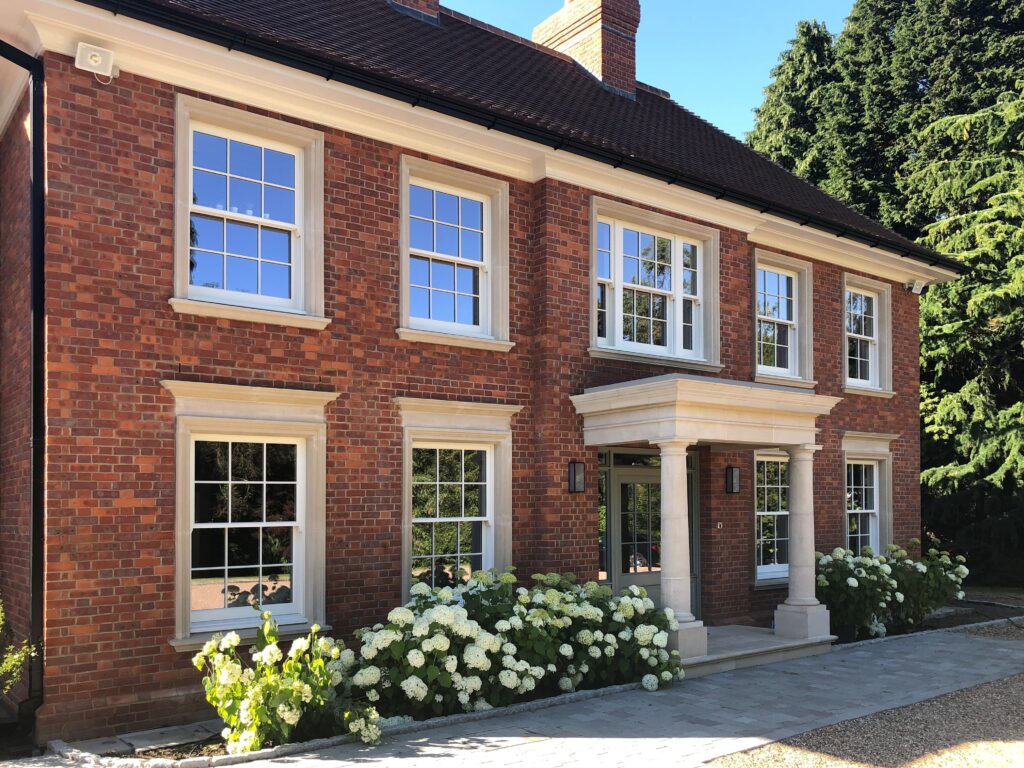
When planning a new build, renovation or extension, it’s worth understanding what a cast stone window surround actually does, and how it differs from the window frame itself. The two are often mentioned in the same breath, but they aren’t competing products. They serve different purposes and are designed to work together.
The window frame, whether timber, uPVC or aluminium, forms part of the window itself, supporting the glazing and fitting within the opening. A cast stone surround is installed around the outside of that opening, adding architectural detail and character to the façade rather than performing any structural role in the window.
This guide explains the difference in more detail: what cast stone window surrounds are, how they work alongside timber, uPVC and aluminium frames, and what to consider when deciding whether a cast stone window surround is right for your project.
Frequently Asked Questions
| Question | Answer |
| Can cast stone window surrounds be used with any type of window frame? | Yes. Cast stone surrounds work with timber, uPVC and aluminium frames. The frame forms part of the window, while the cast stone surround provides an architectural finish around the opening. |
| How long do cast stone window surrounds last? | When correctly installed, cast stone will last for many decades with minimal maintenance. All Acanthus products are frost-proof and comply with BS1217 and UKCSA requirements. |
| Do cast stone window surrounds require maintenance? | Unlike timber, which needs regular treatment, cast stone does not need painting or staining and is not vulnerable to rot, moisture, or pest damage. |
| Can cast stone be fitted to an existing property? | Cast stone is best suited to new builds or renovations where masonry is being removed and replaced, not simply added to. |
| Can cast stone window surrounds be made bespoke? | Yes. Surrounds can be manufactured to your own specification or copied from existing surrounds for extensions and refurbishments. |
What Are Cast Stone Window Surrounds?
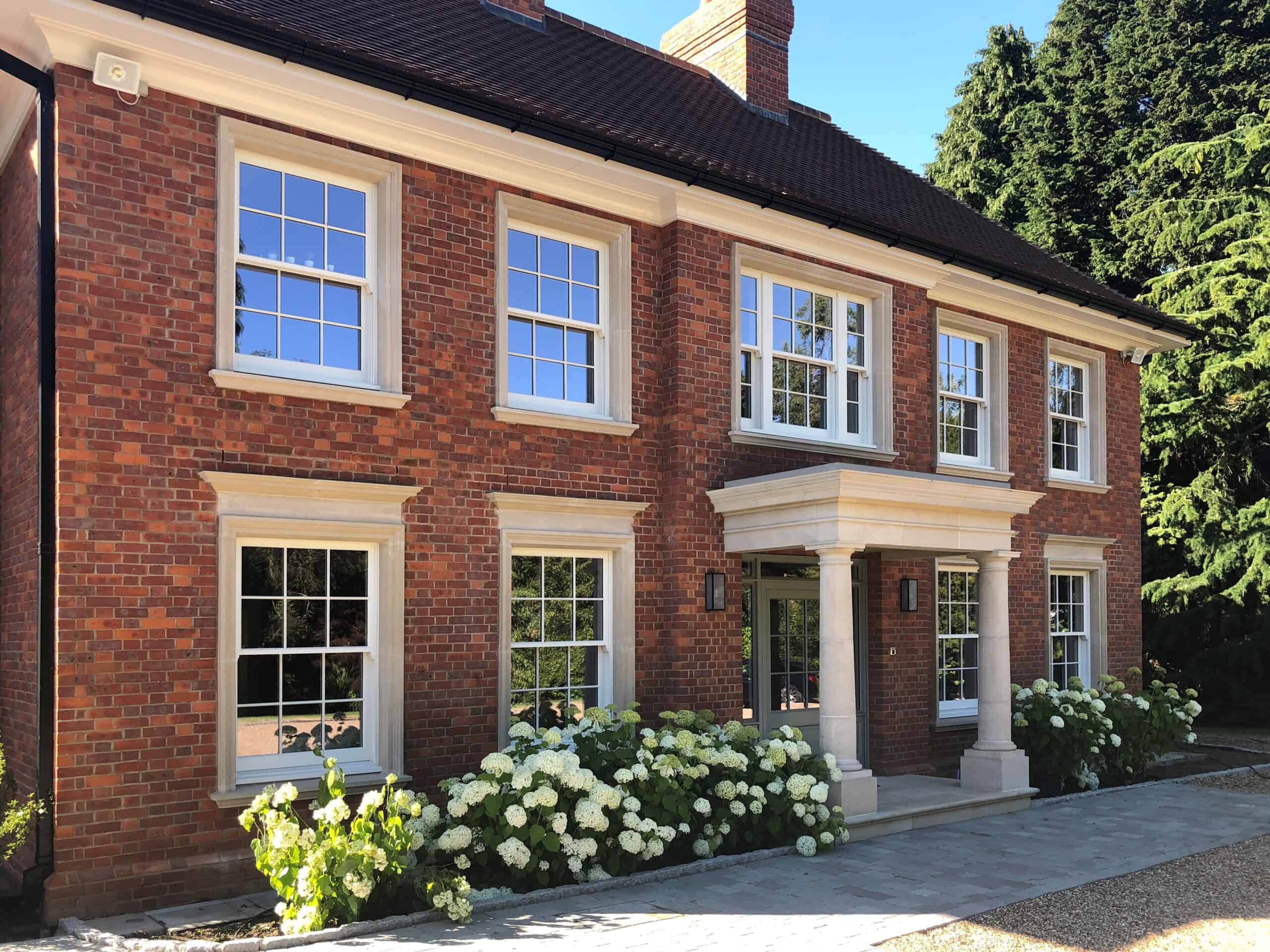
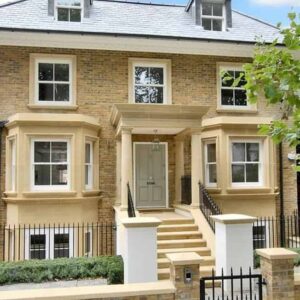
Cast stone window surrounds are architectural frames fitted around the exterior of window openings to add definition, detail, and character to a building’s façade. They typically consist of a cill at the base, jambs running either side of the opening vertically, and a head or keystone detail across the top.
The material itself is manufactured from a carefully formulated mixture of natural aggregates and additives – a process covered in detail in our previous blog, The Process of Making Bespoke Cast Stone. Each piece is hand-cast by our skilled craftsmen using a semi-dry method, with colour pigments incorporated during manufacture to achieve a finish that closely resembles natural stone.
Key Features
Each piece is hand-cast using a semi-dry method for precision and consistency. Before production begins, CAD drawings are produced and submitted for approval, and a three-stage quality control process covers factory, order, and dispatch checks throughout manufacture. Products are available in a range of natural stone colours, with bespoke colour matching available, and all surpass the performance requirements of BS1217, the UKCSA Specification for Cast Stone, and NBS clause F22.
Common Applications
Cast stone window surrounds are used across a broad range of projects and property types, including:
- New build residential properties – where they are specified by architects and developers to add architectural character from the outset
- Period property renovations – where they are used to restore or replace original stone surrounds, maintaining the character of the building
- Extensions and refurbishments – where bespoke surrounds are matched to existing stonework to ensure a seamless finish
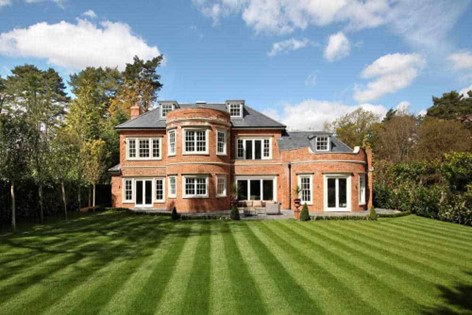
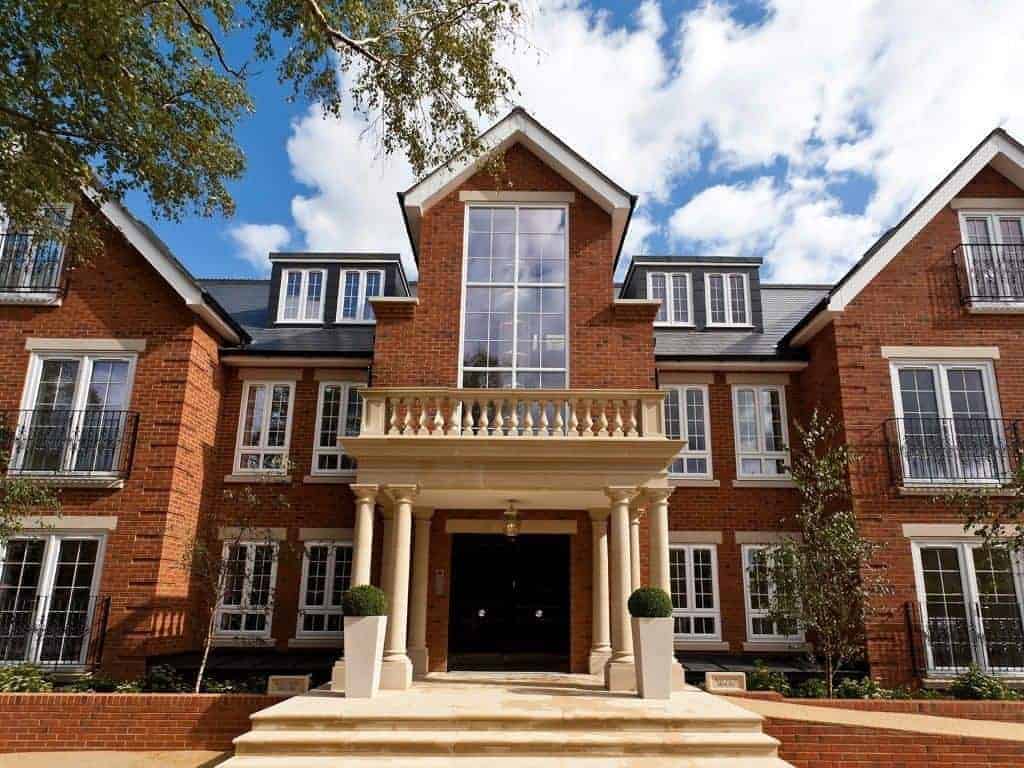
- High-end and luxury homes – where they form part of a wider scheme of cast stone features designed to enhance kerb appeal and property value
- Commercial and institutional buildings – where a classical or traditional aesthetic is required
Benefits of Cast Stone
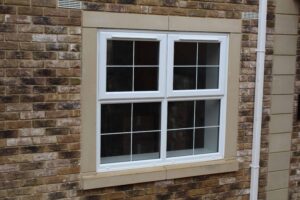
There are many benefits to incorporating cast stone window surrounds into a building’s design. Whether paired with timber, aluminium or uPVC windows, they add architectural interest while offering excellent durability, low maintenance and the potential to increase a property’s value.
Suits a Wide Variety of Properties
Cast stone suits a remarkably wide variety of properties. From modern luxury homes to charming traditional buildings, it can be colour-matched to complement existing stonework or brickwork.
Adaptable and Versatile
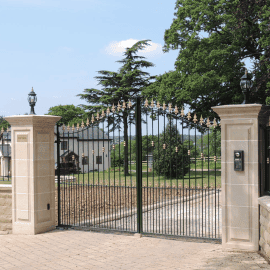
Cast stone is highly adaptable and can easily be made bespoke to your own specification. Whether you need a standard profile or something unique to your property, it can be produced to meet your exact requirements. Once you’ve chosen a profile for your window surrounds, it’s also straightforward to extend that aesthetic across the rest of the property: door surrounds, pier caps, copings, gate pillars, a portico, all made in the same matching finish for a cohesive, considered look.
Adds Value to Your Property
Incorporating cast stone into your property is not just an aesthetic decision; it is a smart financial one, too. According to the United Kingdom Cast Stone Association (UKCSA), incorporating cast stone can boost the value of your home by up to 5%.
As Gavin Henshaw, Technical Manager at Acanthus Cast Stone, puts it: “It adds wow factor, kerb appeal, and adds to the value of the house – and for what is a relatively small amount to pay, you get great bang for your buck.”
Cost-Effective
Similarly, another key benefit of cast stone lies in its cost-effectiveness. It is manufactured using a mould, enabling efficient, repeatable production. Unlike natural stone, which requires individual carving for each piece, cast stone can be filled into the mould multiple times a day, thanks to the semi-dry method of manufacture. This increases productivity and reduces overall production costs, making it an attractive choice without compromising style or quality.
Bespoke Options
Custom-made window surrounds can be manufactured to your own specification, or existing surrounds can be copied for extensions and refurbishments, ensuring the finished result suits both the property and your personal style.

Disadvantages of Cast Stone
As with any building material, cast stone is not without its limitations. Being aware of them from the outset will help ensure it is the right choice for your project.
Not Always Suitable for Renovation Projects
One of the more common misconceptions about cast stone is that it can simply be fixed onto an existing façade to improve its appearance. In reality, this is rarely straightforward. As Gavin Henshaw, Technical Manager at Acanthus Cast Stone, explains: “A lot of customers think they can just stick our cast stone onto the building’s facade to make it look more aesthetically pleasing. With our product, it’s not really suitable – you generally have to go down to quite thin units, so they’re not too heavy when you’re sticking them on. So we try to steer away from renovation projects unless they are knocking out chunks of masonry that we can fit our stone into.”
This means cast stone is generally best suited to new build projects or renovations where masonry is being removed and replaced rather than simply added to.
Requires Skilled Installation
Cast stone needs to be installed correctly to perform as it should. Incorrect installation, such as failing to use the right membranes, slip planes, or mastic sealants, can lead to cracking and water ingress over time. Finding an experienced installer is an important part of the process.
Weight and Logistics
Larger cast stone units can be heavy, requiring careful planning for on-site logistics. For heavier pieces, lifting sockets need to be cast into the stone to allow safe handling and installation, which adds a layer of planning that lighter materials such as timber do not require.
Higher Upfront Cost
Cast stone is more cost-effective than natural stone, but it does carry a higher upfront cost than a plain frame on its own. For homeowners working to a tight budget, this is worth factoring in, though the durability and added property value cast stone offers can make it a sounder investment over the longer term.
Window Frame Options
There are three main window frame materials used in UK homes: timber, uPVC and aluminium. Each performs the same core function, supporting the glazing and fitting within the window opening, but differs in cost, maintenance and appearance. A cast stone surround sits outside the frame entirely, so it can be added around any of the three.
Timber Window Frames
Timber is a natural wood window frame material known for its energy efficiency and traditional appearance.
- Energy efficiency: Wood is a natural insulator, making timber one of the highest-performing frame materials for thermal efficiency.
- Appearance: Natural grain finish, and frames can be stained or painted in any colour.
- Maintenance: Requires regular treatment (staining or painting) to protect against moisture and weathering.
- Repairability: Easy to repair sections without replacing the whole window.
- Cost: More expensive than uPVC.
- Durability consideration: More vulnerable to deterioration in exposed or coastal locations due to salt air.
- With cast stone: Timber and cast stone are a traditional pairing, commonly seen on period properties and heritage-style new builds. The natural material of the frame complements the textured, stone-like finish of the surround, and cast stone can be colour-matched to sit alongside painted or stained timber.
uPVC Window Frames
uPVC is a plastic (polyvinyl chloride) window frame material and the most common frame type installed in the UK.
- Lifespan: Typically, 20 years or more.
- Maintenance: Low. Does not rot, rust or flake.
- Cost: The most affordable of the three frame materials.
- Energy efficiency: Good thermal performance.
- Colour range: Usually only available in white as standard; other colours are limited.
- Restrictions: Not generally permitted on listed buildings.
- Aesthetic positioning: Considered less visually refined than timber or aluminium.
- With cast stone: A cast stone surround is one of the most effective ways to add architectural character to a uPVC window, since uPVC’s limited colour range and simpler profile can otherwise look plain on more traditional or higher-end façades. The surround adds definition and kerb appeal without the cost of upgrading the frame material itself.
Aluminium Window Frames
Aluminium is a metal window frame material known for its slim profile and use in contemporary architecture.
- Profile: Slimline frames allow more natural light into a property than timber or uPVC.
- Strength: Strong and durable, suited to larger glazed openings.
- Maintenance: Low, beyond regular cleaning.
- Cost: More expensive than uPVC, but usually less than timber.
- Thermal performance: Conducts heat readily, so it requires thermal barriers to limit heat loss and reduce condensation risk.
- Sustainability: Not a natural material but is recyclable.
- With cast stone: Aluminium’s slim, contemporary profile contrasts effectively with cast stone’s more traditional texture, a pairing often used to give a modern building a classical or characterful edge. It also works well where large glazed openings are framed individually with cast stone detailing rather than a continuous stone treatment.
Window Frame Comparison at a Glance
| Material | Typical Cost | Maintenance | Energy Efficiency | Works With Cast Stone | Best Suited To |
| Timber | Highest | Regular treatment needed | Highest | Yes, traditional pairing | Period properties, listed buildings, and natural aesthetic |
| uPVC | Lowest | Minimal | Good | Yes, adds character to a plainer frame | Budget-conscious new builds and renovations |
| Aluminium | Mid to high | Minimal | Requires thermal barriers | Yes, contrasts with a modern frame | Contemporary properties, large, glazed openings |
Cast stone surrounds are compatible with all three frame materials because they are structurally independent of the frame. The surround is fitted to the masonry opening, not to the window itself, so the choice of timber, uPVC or aluminium has no bearing on whether a cast stone surround can be added.
How to Choose the Right Option For You
If you’re self-building, renovating or specifying windows for a development, the decision isn’t cast stone versus timber, uPVC or aluminium. It’s whether to add a cast stone surround around your chosen frame.
You may wish to specify cast stone window surrounds if you:
- Want to enhance kerb appeal
- Want to add architectural character to a new build
- Need bespoke surrounds to match existing stonework
- Want a durable, low-maintenance exterior feature
- Plan to incorporate matching cast stone products
A plain frame without a surround may suit your project if you:
- Are working to a tighter budget
- Prefer a simpler, more understated façade
- Are working within constraints that limit external alterations, such as a listed building or conservation area
For many projects, the ideal solution is to combine a well-made frame, timber, uPVC or aluminium, with a cast stone surround, allowing each element to perform the role it is designed for while creating a cohesive, high-quality appearance.
Why Choose Acanthus Cast Stone
We specialise in the design and manufacture of quality semi-dry cast stone products for use on commercial, residential, and private projects. All of our products are available in a range of natural stone shades with the same texture and feel as carved stone, are completely frost-proof, and far exceed the performance requirements of BS1217, the UKCSA Specification for Cast Stone, and NBS clause F22.
From a straightforward, plain surround to a fully bespoke Georgian profile, we have an option to suit every project and every budget.
Our Options
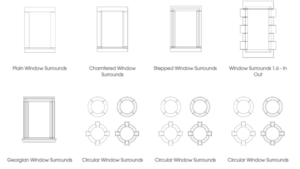
We produce a full range of standard cast stone window surround designs to suit any size opening. Simple plain surrounds through to the highly detailed (and very popular) Georgian surrounds:
Plain Window Surrounds – a clean, simple profile suitable for a wide range of property styles
Chamfered Window Surrounds – features an angled edge detail for a subtle degree of definition
Stepped Window Surrounds – a layered profile that adds depth to the window opening
Window Surrounds 1.6 In/Out – offers both inward and outward projection options for greater flexibility on site
Georgian Window Surrounds – a classic profile suited to period properties and traditional new builds
Circular Window Surrounds – designed to frame circular or oval window openings
View our Cast Stone Window Surrounds
Alternatively, custom-made window surrounds can be manufactured to your own specification, or existing surrounds can be copied for extensions and refurbishments.
Our Colour Options
We offer a wide range of natural stone colour choices to help you choose the right colour for your project. We have created a blog to help you through the process.
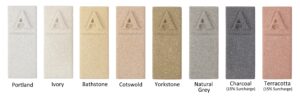
To get an idea of cast stone’s feel and colour, you can request a free sample. Seeing and handling the material in person gives you a clearer sense of its texture, colour, and how it will complement your design.
Conclusion
Cast stone window surrounds and window frames aren’t competing products. They perform different roles within a building, and one works around the other, whatever type of frame you choose. A window frame, whether timber, uPVC or aluminium, forms part of the window itself, while a cast stone surround frames the opening externally, adding architectural detail, durability and kerb appeal.
Whether you’re building a new home, extending an existing property or replacing original stonework, cast stone window surrounds can significantly enhance the finished appearance of your project, complementing whichever frame material you choose.
For further information on our bespoke cast stone products or to request a quote, feel free to contact one of our friendly Acanthus team or call us on 01773 447065.