Introduction
Windows can make or break a project. Get the detailing right and even a simple elevation looks considered. Leave it as an afterthought and the whole facade can fall flat, however much you’ve spent on the windows themselves.
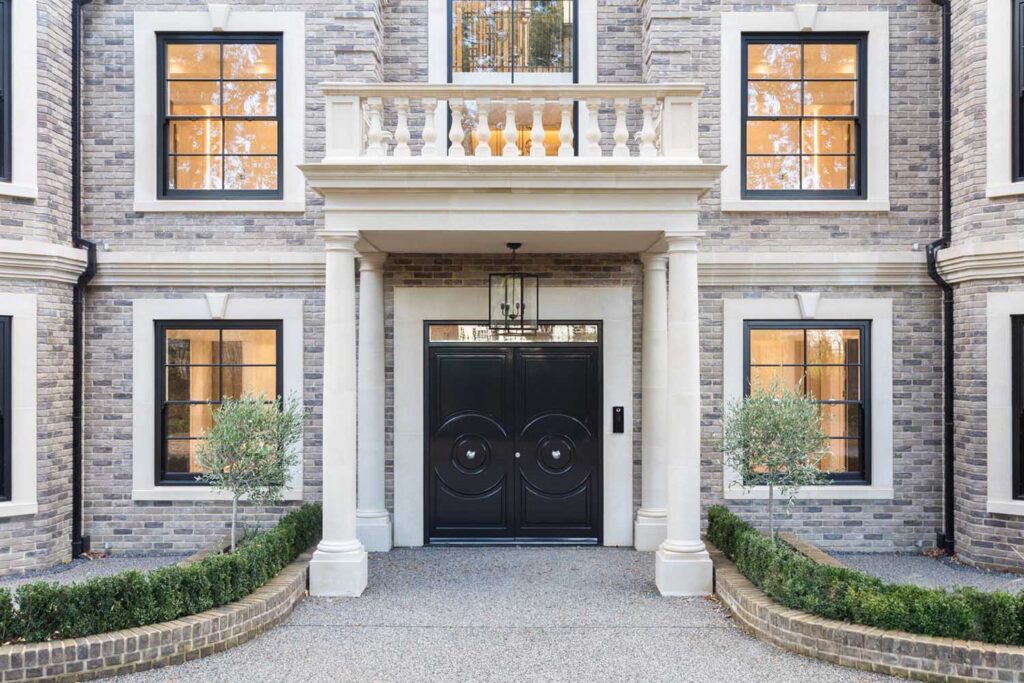
I see it time and again: a lot of people put real budget into the windows, the frames, the glazing, the performance, but it’s what surrounds them that a passerby actually notices. Cast stone window heads, cills and surrounds are the detail that does the heavy lifting, adding genuine architectural interest to brick, render or stone. From simple plain surrounds to full Georgian designs, our standard range suits most projects, and it’s a surprisingly affordable way to add style and lasting value. Want something truly unique? We can create bespoke designs to your exact specification, to replicate existing details or match an extension to what’s already there.
In this guide, I’ll walk through what heads, cills and surrounds actually do, what to get right before you draw anything up, why planning them in early matters more than most people realise, and when it’s worth going standard versus bespoke. I’ll also share two projects that show this in practice, one a single luxury self-build, the other a small development, along with what each one tells us about value for money.
FAQs
| Question | Answer |
| Can I add cast stone window detailing after the build is finished? | You can retrofit these items, but it isn’t recommended, and for some of them it’s a challenging undertaking. A cill is the easiest, as no support for the brickwork is needed. For a head, the entire building above has to be supported while it goes in, and it can be tricky to get the stone into place between the upper brickwork, whatever is supporting it and, if the head is in more than one piece, the lintel below. Retrofitting jambs means cutting all the bricks that run down the side of the window and chasing out joints to insert the anchor ties. The simplest and most cost-effective route is always to plan for heads, cills and surrounds before the windows go in. |
| What’s the most popular cast stone cill design? | The C2 is the most popular, at 140mm high with 100mm stoolings built into the brickwork either side of the window. |
| Do cast stone window cills come in standard colours? | Yes. The standard colour range includes Portland, Bathstone, Cotswold, Yorkstone and Natural Grey, alongside bespoke colour matching for projects that need to match existing brick or stonework. |
| Does cast stone window detailing add value to a property? | Yes. It’s one of the more affordable ways to add genuine kerb appeal and value, particularly when a plain design is used well rather than defaulting to the most ornate option, as our Pentagon project shows below. |
Heads, Cills & Surrounds Explained
Heads, cills and surrounds work together as a system around each window opening, and the cill in particular does a practical job as well as a decorative one.
Cast Stone Window Heads
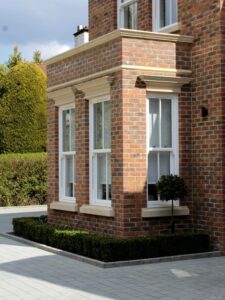
The head sits above the window opening. It adds visual detail, from a simple plain lintel-style design through to a full Georgian arch. Heads sit flush with the face of the wall, with the exception of Georgian designs.
Our most popular head is the H3 at 215mm high, with 100mm bearings at each end built into the brickwork. Openings vary on older houses, so heads are often made to order to suit the exact opening. Newer properties commonly have standard openings, as you see all the time on new build plots. Where render is used, a deeper allowance is built in.
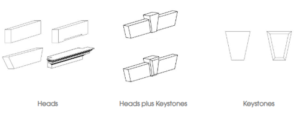
Heads aren’t load-bearing, so a lintel is always required alongside them. A head in one piece can have the lintel above it, while a head in more than one piece needs the lintel below. Installation should follow our Technical Information page and UKCSA guidance. Keystones, in standard or custom-made designs, are often paired with heads for extra detail.
See our full range of Cast Stone Window Heads
Cast Stone Window Cills
The cill sits beneath the window and is one of the most practical pieces of detailing on a facade, shedding water away from the brickwork below.
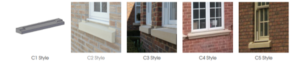
The standard range runs from C1 to C5, with C2 the most popular choice at 140mm high with 100mm stoolings. Slip cills have no stoolings and are made 12mm less than the window opening, leaving 6mm either side to install and point. They are often used for bay windows in both 45° and 90° sets, although you do sometimes see stools used in bays too.
See our full range of Cast Stone Window Cills
Cast Stone Window Surrounds
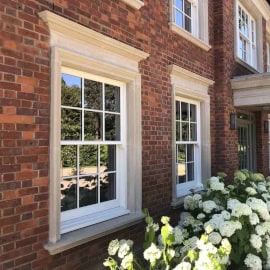
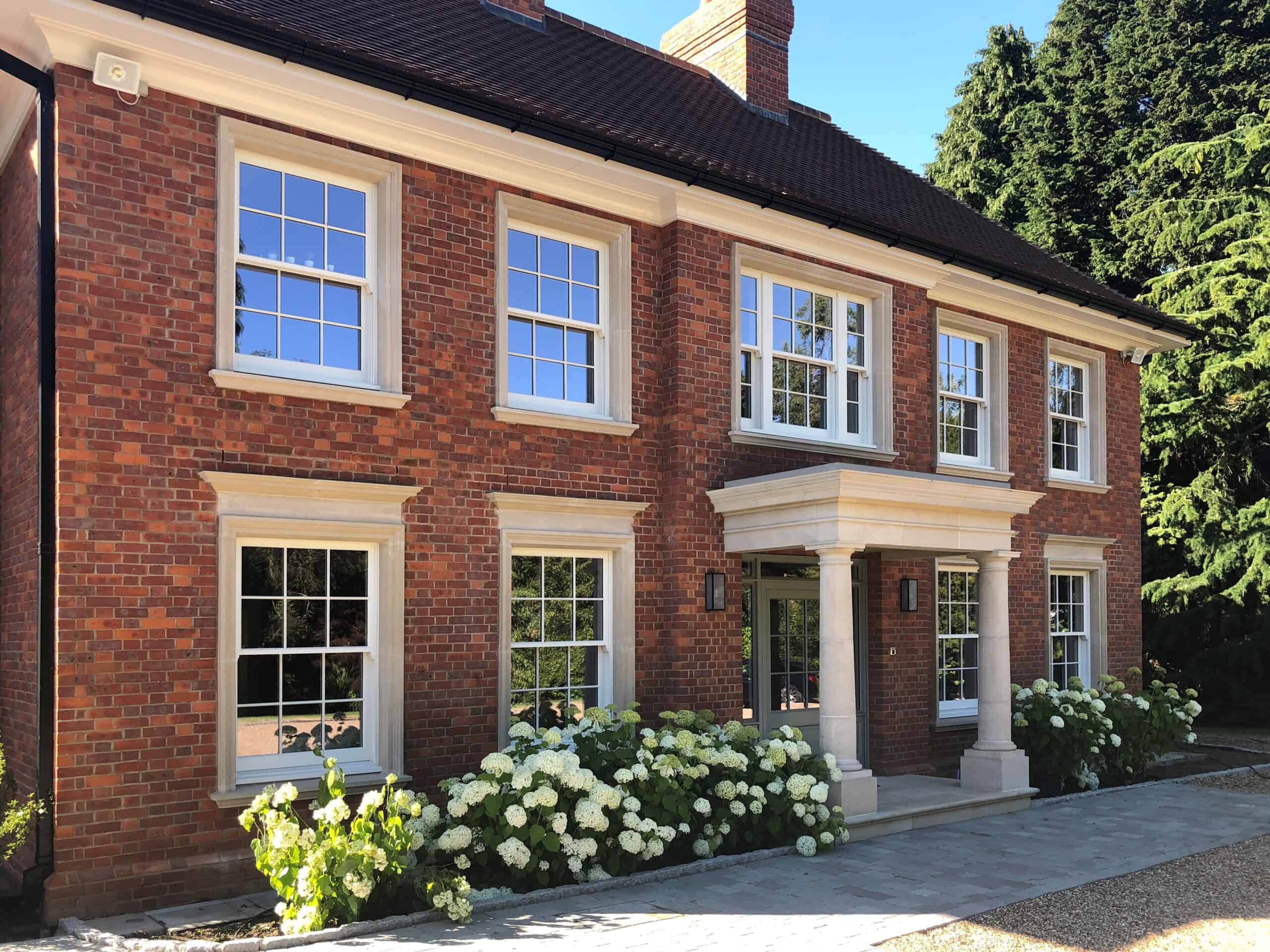
The surround frames the full window opening, tying the head and cill together into one continuous piece of detailing. Designs range from simple plain surrounds through to the highly detailed, and very popular, Georgian style.
Custom-made surrounds can also be built to your own specification, or existing surrounds copied to match for an extension or refurbishment. Window and door jambs are generally supplied with cast-in anchor slots and ties for fixing.
See our full range of Cast Stone Window Surrounds
Getting it Right at the Drawing Stage
Heads and cills are often made to order, because opening sizes vary from project to project, particularly on older properties. Getting the specification right before anything is ordered matters more than people expect. As Gavin Henshaw, our Technical Manager, puts it:
“A lot of our cills just sit on the outer leaf of brickwork. If you’re putting your window frame further back, it’s not even sitting on anything at all; at that point we have to advise a deeper cill so the window frame has something to rest on. They also have to consider whether the facade is just brickwork or brick with render, because if it needs render, the cill needs to be made deeper.”
Frame depth, render thickness and brick versus render specification all need to be confirmed before drawings are finalised, not worked out on site once the windows have already arrived.
Why Planning Ahead Matters
The most common mistake I see is people coming to us after a build is finished, once the facade already looks plain, wanting to add detail in. By that point, the options are limited (see the FAQ above for what’s realistically possible on each element).
People don’t realise the lead times involved. They might order their windows, find the surround isn’t ready, and realise they can’t wait for it. Retrofitting heads and jambs also means knocking out proper brickwork, which is a big undertaking even where it’s technically possible.
Cills can be installed prior to the windows going in, and the same sequencing logic applies across heads, cills and surrounds. That’s exactly why they need to be part of the plan from the start, not brought in once the windows are already ordered.
Project Spotlight – The Pentagon Project
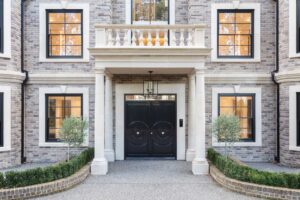
One of the standout examples of getting this right is the Pentagon project. The surrounds on the property are beautiful; every window and door had it framed. It’s a really stunning project. If you asked me what the best window frame project we’ve worked on is, I’d pick that one.
They used simplicity to make a statement. A lot of the time, customers will go for an ornate surround in a Georgian style, lots of detail, bolding. This project was different in that they used a completely plain surround but added a key bit of detail in the keystone, and it created such a wonderful finish. They matched the colour perfectly to their outer stonework.
Their brickwork is beautiful. It’s such a wonderful feature to use on this house that they almost didn’t want to make everything too ornate or fancy and take away from how lovely that brickwork is.
Front-facing windows were finished with a single keystone each, adding a clean point of detail without covering the whole opening, a beautiful detail that only cost £25 per keystone.
By using a standard plain surround with a keystone rather than a fully Georgian design, the saving was significant. A plain surround like this is around 50% cheaper than a Georgian one, so they saved around half by going for a standard surround. With this many windows across the property, that’s a huge saving.
The property was finished in Ivory coloured cast stone and carries matching cast stone detailing elsewhere, including a portico, a small balustrade, a string course separating two floors, and coping stones around the bay windows, all in the same colour, part of the same considered approach that makes the whole property feel like an extraordinary luxury home.
Project Spotlight – Cowers Lane, Derbyshire
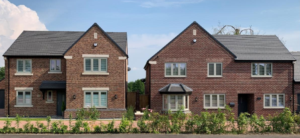
Cowers Lane is a different kind of project altogether, a small development of around six houses in Derbyshire, and a good example of how this detailing works at scale for developers managing multiple plots rather than one self-build.
The house on the left-hand side has our cast stone window cills and heads. For a relatively small investment of around £450 + VAT per house, you can see the difference it makes to how finished the property looks, compared to the house on the right without that detailing.
How Much Value Do Cast Stone Cills, Heads and Surrounds Add?
Cast stone gives the look of natural stone or bespoke joinery detailing at a fraction of the cost, and even standard-range pieces tend to look more expensive than they are. That makes it one of the most efficient ways to add perceived value to a property ahead of sale or valuation.
Pentagon and Cowers Lane both make this point in different ways. Pentagon shows that a well-chosen plain design with the right detail can look just as considered as a more ornate one, at roughly half the cost. Cowers Lane shows that even a modest addition of around £450 + VAT per house can visibly improve how finished a development looks, adding real kerb appeal and ‘wow factor’.
How Acanthus Can Help
Our Options
From standard designs to fully bespoke pieces, our range covers heads, cills and window surrounds for brick, render and imperial brickwork, including slip and bay cill sets.
Our products are manufactured in Derbyshire in line with the performance requirements of BS 1217 Cast Stone, the UKCSA Specification for Cast Stone and NBS Clause F22, providing confidence in their quality and durability.
Our Colour Options
Our standard colour range includes Portland, Bathstone, Cotswold, Yorkstone, and Natural Grey, with a 15% surcharge for Charcoal and Terracotta finishes.
We offer a wide range of natural stone colour choices to help you choose the right colour for your project. We have created a blog to help you through the process.
To get an idea of cast stone’s feel and colour, you can also request a free sample. Seeing and handling the material in person gives you a clearer sense of its texture, colour, and how it will complement your design.

Conclusion
Windows really can make or break a project, and the difference usually comes down to planning the detailing in early rather than trying to add it in later. Whether it’s a single self-build or a development of several homes, getting heads, cills and surrounds right from the start, and choosing the right route between standard and bespoke, is one of the most cost-effective ways to lift a facade.
For more information on our window products or to request a quote, feel free to contact one of our friendly Acanthus team or call us on 01773 540704.