Introduction
In June 2022, Part L of the building regulations was introduced, marking a significant change in the construction industry. This update included an increase in the cavity wall insulation from 100mm to 150mm wide. The implementation of these new regulations was carried out in phases, with a 12-month transitional period. It is worth noting that this transitional period ended last year, and the new regulations are now fully in place.
In this blog, we will review the reasons behind these regulatory changes, why they were implemented, explore how they have affected building practices before discussing how wide the cavity wall should now be to be compliant. Additionally, we will introduce our new compliant coping stones designed to meet the latest regulations. This will ensure that your construction projects adhere to the updated standards whilst also having the ‘wow factor’ of our cast stone coping stones.
In this guide, we’ll explain:
- The current cavity wall width requirements
- Why the regulations changed
- Whether they apply to your project
- How to ensure compliance
The New Changes in a Nutshell
Firstly, in summary, Part L of the Building Regulations focuses on retaining heat in properties, and this has led to a new requirement for 150mm of insulation between the outer and inner walls in all new builds. This change has increased the overall cavity wall size from 300mm to 350mm.
For a more detailed look into Part L of the Building Regulations, click here for more information.
Why The Regulations Have Changed
The changes were made by the Government, particularly the Department for Levelling Up, Housing and Communities, which introduced these updates to help towards achieving the UK’s Net Zero target by 2050.
Increasing the width of the cavity walls to 150mm allows the walls to be better insulated, enabling your home to retain more heat and thus reducing the amount of energy required for heating. As a result, not only will this help in reducing carbon emissions, but it will also lead to cost savings for homeowners in the long run. The increased insulation will create a more comfortable living environment and contribute to the overall sustainability efforts in reaching the country’s Net Zero goal.
The UK government introduced these changes to:
- Reduce energy consumption in homes
- Improve thermal efficiency
- Support the UK’s Net Zero 2050 target
Thicker insulation means:
- Less heat loss
- Lower energy bills
- More comfortable indoor temperatures
Do Part L Building Regulations Apply to Me?
When considering the implementation of Part L Building Regulations, it is crucial to understand when these regulations apply.
The regulations primarily focus on the ground-level cavity walls as well as the spaces between the ceiling rafters of a building. With the ground-level cavity walls now being wider, it makes sense to maintain this width for the cavity walls, regardless of the specific level within the building. This not only makes construction easier but also allows your property to be better insulated as it reduces heat loss.
For those starting on new construction projects, it is essential to ensure that there is a minimum of 150mm width of insulation. Conversely, if you are dealing with an existing property, there is generally no requirement to alter the width of the cavity wall, so currently there is no retrofitting requirement.
However, before commencing any work on your property, we would recommend checking with your local planning council or architect. This step ensures that you have a clear understanding of the regulations in relation to your specific circumstances, guaranteeing compliance with the necessary standards.
How You Can Comply with Our New Compliant 350mm Coping Stones
We are up to date on the latest regulations, so we’ve created our new cast stone coping stones for 350mm walls. By using our coping stones, you can be sure that you meet the new regulations.
Our range of coping stones to suit 350mm walls includes various designs to cater to your specific needs:
- Plain and moulded flat coping stones: These coping stones have a flat-top surface.
- Plain and moulded once weathered coping stones: Once weathered coping stones feature a sloped design on one side to direct rainwater away from the brickwork.
- Plain and moulded apex coping stones: Apex coping stones are equipped with a ridge in the centre to allow rainwater to flow on either side of the wall.
In addition to our range of cast stone coping stones designed for 350mm walls, we provide external and internal units, as well as end pieces, to ensure a seamless finish to your project. The units have a maximum length of 600mm, offering versatility to suit various applications.
We also offer custom-made coping stones where your design has specific requirements. By offering a comprehensive selection of coping stones and bespoke options, we aim to provide a complete solution that meets the highest standards of design and functionality.
Our range of cast stone coping stones to suit 350mm cavity walls can be seen below:
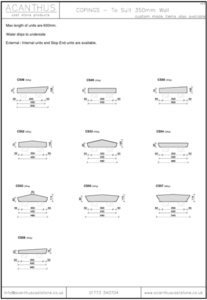
You can also access this as a PDF here.
For more detailed information and helpful tips on how to use our coping stones effectively, be sure to check out our comprehensive coping stone guide.
Frequently Asked Questions
| FAQs | |
| How wide should a cavity wall be in the UK? | A modern cavity wall should be around 350mm wide, including 150mm insulation, to comply with current Part L regulations. |
| Do I need to upgrade existing cavity walls? | No – Part L regulations generally apply to new builds, not existing properties. |
| What is the minimum cavity width for insulation? | The current standard requires at least 150mm insulation thickness. |
| Does cavity wall width affect energy efficiency? | Yes. Wider cavities allow for more insulation, which significantly improves thermal performance and reduces heat loss. |
Colour Choice
To allow further customisation, all our coping stones are available in a variety of colours to suit different styles and preferences. Our colour range, which covers the vast majority of building colours, is currently Portland, Ivory, Bathstone, Cotswold, Yorkstone, Natural Grey, Charcoal, and Terracotta. Each of these options will complement various locations, cater to different personal styles, and can impart a distinct style to your luxury home.
Our colour choices can be seen below:
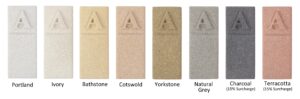
When deciding on your colour choice, the best way to explore the different options and compare how they can complement your project is by requesting our free samples. By seeing the samples in person, you can get a better sense of how the colours will look on the building and how the colour can work with your brickwork. You can request your free cast stone samples here.
Our samples are also really useful when it comes to planning meetings as you can take them along and get the colour approved.
When it comes to choosing the ideal colour for your project, we understand the significance of getting it right. Therefore, we’ve put together a comprehensive guide to assist you in making the best colour choice. You can access the guide by clicking here.
Conclusion
In conclusion, the recent regulatory changes in the construction industry, particularly the increase in cavity wall insulation width to 150mm as implemented in Part L of the Building Regulations, reflect the country’s need and desire to work towards more sustainable building practices and energy efficiency. These changes are important steps towards achieving the UK’s Net Zero target by 2050 and highlight the importance of reducing carbon emissions and promoting energy conservation in homes.
For those navigating these new regulations, we provide compliant coping stones designed specifically for 350mm walls to ensure that construction projects meet the latest standards. With a range of coping stone designs available, including flat, once weathered, and apex options, along with external and internal units and end pieces for a seamless finish, we offer a comprehensive solution for your project needs.
How Acanthus Can Help
We have a wide range of both standard and bespoke cast stone coping stones tailored to meet your individual needs and preferences. When you are looking for a design that complements a specific architectural style, our expertise and versatility allow us to create coping stones to suit your project as well as meet the new regulations.
“At Acanthus, our new range of cast stone coping stones are compliant with the latest regulations, ensuring that you meet the standards as well as adding that luxurious wow factor for your visitors, as well as those just passing by your home. And to be honest, it’s great to see the government looking at ways to meet our Net Zero targets. We are all for improving practices and helping our customers achieve the house of their dreams.”
Gavin, Project Manager at Acanthus
If you require any further information on cast stone coping stones or wish to discuss any other of our bespoke cast stone products or if you have any questions, contact one of our friendly Acanthus team. Alternatively, you can call us on 01773540704.